When Is Your 4/0 AWG Wire Only 4 AWG?

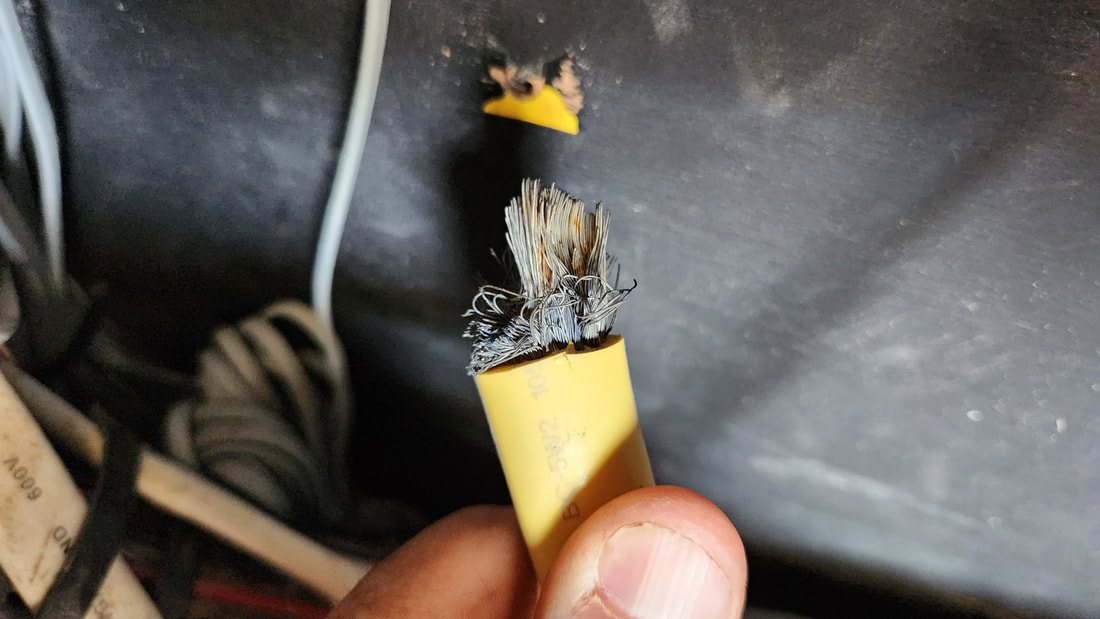
Our team of ABYC Certified Technicians was recently performing a lithium battery system upgrade when we discovered a critical (and surprisingly common) problem with the inverter’s case grounding cable.
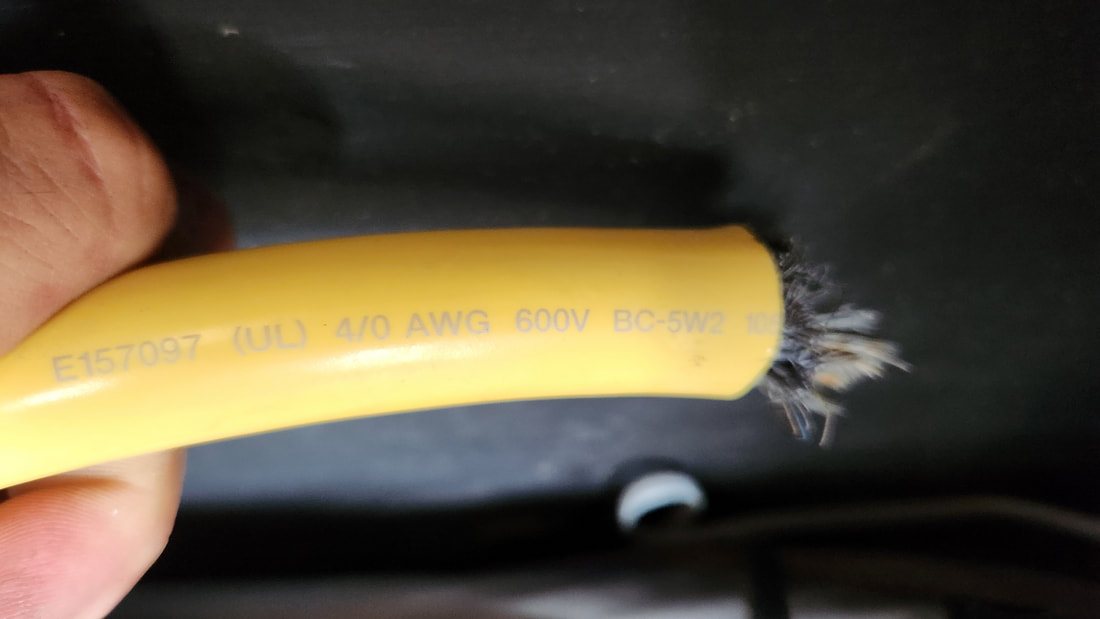
The good news first: a case grounding cable was actually installed. This important safety conductor is missing from the majority of boats we see — even on many “professional” installations. The original installer even chose 4/0 AWG (matching the primary conductors), which exceeds the minimum size required by ABYC standards.
The problem was how the cable was terminated.
In order to force the large 4/0 AWG cable into the inverter’s grounding terminal, the installer simply cut a large portion of the strands away. Once those strands are removed, the wire is no longer a true 4/0 AWG conductor. A wire can only carry current through the strands that remain connected. Cut half the strands and you effectively reduce a 4/0 cable to something closer to 4 AWG — or even smaller — at the connection point.
Think of it like a water pipe. No matter how large the pipe is for most of its length, the flow is limited by the narrowest point. The same principle applies to electrical conductors.
There is a second, equally serious danger. When strands are cut short, the remaining frayed ends often stick out of the terminal. If any of those loose strands contact a nearby conductor with a different potential, they create an unprotected short to ground. Because this fault path bypasses the overcurrent protection, the result can be melted insulation, damaged equipment, or fire.
ABYC E-11 (AC and DC Electrical Systems on Boats) requires that all equipment grounding conductors be properly sized, terminated, and protected. Simply “making it fit” by cutting strands violates both the letter and the intent of the standard.
Lithium battery systems make correct grounding even more important. These systems can deliver very high currents very quickly. A compromised ground path under fault conditions leaves the boat and its occupants exposed.
Key takeaways:
Never cut strands out of a cable to make it fit a terminal.
Use the correct terminal size or an approved reducer/adapter designed for the purpose.
Inspect existing grounding and bonding connections carefully during any electrical upgrade.
When in doubt, have the system evaluated by an ABYC Certified Technician.
If you have questions about your boat’s grounding system, inverter installation, or lithium upgrade, our ABYC certified team is here to help. You can read more about our electrical services here.
Check out our YouTube video on this subject here.
We’ll see you out on the water.
Frequently Asked Questions Why is the inverter case ground so important? The case ground provides a low-resistance path for fault current if the inverter chassis becomes energized. Without it (or with a compromised connection), the metal case can remain live and create a shock or fire hazard. Is it ever acceptable to cut strands out of a large cable? No. Cutting strands reduces the current-carrying capacity of the conductor and creates a fire risk from loose strands. Proper terminals or approved adapters must be used instead. Does ABYC allow a smaller ground wire than the main positive cables? Yes — ABYC E-11 permits equipment grounding conductors to be smaller than the current-carrying conductors in many cases, provided they meet the minimum size table in the standard. However, the wire that is installed must still be intact and properly terminated. What should I look for when inspecting my own grounding cables? Check that the full cross-section of the cable is captured in the terminal, that no strands are cut or frayed, that the connection is tight and corrosion-free, and that the cable is properly supported and protected from chafing. Should this be checked during a lithium battery upgrade? Absolutely. Lithium systems can produce much higher fault currents than traditional lead-acid systems. Any existing grounding or bonding deficiencies become more dangerous after a lithium conversion. How can Marine Craft help? Our ABYC Certified Technicians perform complete electrical system inspections, grounding/bonding evaluations, and lithium upgrades every week. Contact us to schedule a review of your vessel.
Posted by Dave C., ABYC Master Technician 25 July 2026